publications
2026
- HASCO: A Hybrid AI Simulation Compiler for Semantic Accident ReconstructionEdin Jelačić, Rong Gu, Cristina Seceleanu, and 5 more authorsPublisher: Schloss Dagstuhl – Leibniz-Zentrum für Informatik
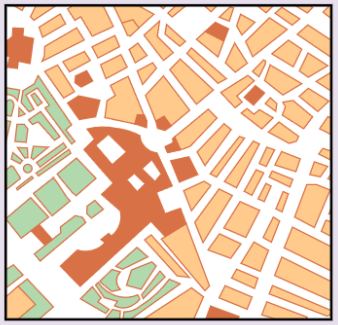
The validation of Automated Driving Systems (ADSs) has shifted from distance-based metrics to Scenario-Based Testing (SBT). Large Language Models (LLMs) have emerged as powerful tools with potential for generating vehicular scenarios at scale. However, generative models, used for direct simulation synthesis, produce inadequate output, therefore necessitating a more structured compilation approach. In this regard, we present HASCO (Hybrid AI Simulation COmpiler), a system that translates natural-language driving scene specifications into executable simulation artifacts (XOSC/XODR files) for the esmini/OpenSCENARIO ecosystem. While LLMs excel at narrative parsing, we demonstrate that direct synthesis of simulation artifacts fails in the vast majority of cases due to hallucinated physics or schema violations. To resolve this, HASCO treats scenario creation as a compilation task rather than a generative one. The pipeline supports three compilation paths: direct synthesis, a Python intermediate (via scenariogeneration), and an ontology-guided path that grounds intent into an intermediate representation (IR) before compilation. We further evaluate a self-judging mechanism for automated repair. Across six operating modes evaluated on 40 real-world accident reports, the ontology-guided compiler and Python-based compiler achieve 95% and 90% executability rates, respectively (compared to 5% for direct synthesis). Additionally, we evaluate outputs on semantic fidelity, positioning HASCO as a robust tool for forensic scene reconstruction.
@inproceedings{Jelacic2026-hc, title = {{HASCO}: A Hybrid {AI} Simulation Compiler for Semantic Accident Reconstruction}, author = {Jelačić, Edin and Gu, Rong and Seceleanu, Cristina and Xiong, Ning and Backeman, Peter and Seceleanu, Tiberiu and Fei, Zhennan and Nouri, Ali}, booktitle = {30th Ada-Europe International Conference on Reliable Software Technologies (AEiC 2026)}, series = {Open Access Series in Informatics (OASIcs)}, volume = {143}, pages = {4:1--4:22}, publisher = {Schloss Dagstuhl -- Leibniz-Zentrum für Informatik}, venue = {Västerås, Sweden}, year = {2026}, date = {2026-06-03}, doi = {10.4230/OASIcs.AEiC.2026.4}, keywords = {Autonomous Driving; OpenSCENARIO; Large Language Models; Scenario Generation; Semantic Reconstruction}, language = {en} } - Machine Learning for Predictive Modeling and Abstraction in Industrial-Scale SystemsEdin JelačićMälardalen University, 2026Licentiate thesis, comprehensive summary
Machine learning is increasingly called upon to guide decisions in critical industrial applications. Its predictive power promises gains in efficiency, yet its black-box nature and lack of guarantees pose risks in contexts where behavior must remain analyzable and safe. This thesis asks how machine learning can be made trustworthy, explainable, and efficient enough for engineers to deploy in practice. Three gaps hamper broader adoption. Few works provide formal or statistical guarantees on ML outputs paired with explanations that engineers can act on (Gap A). Data-driven models that generalize across hardware configurations without retraining remain rare, and existing simulators are prohibitively slow (Gap B). Many contributions address individual components of industrially motivated problems without combining them into validated end-to-end pipelines (Gap C). To address Gap A, we apply abstraction to neural networks, showing that inputs with negligible effect on the output can be formally identified and removed, producing simpler yet bounded models open to verification. We then introduce a conformal prediction framework for CPU load forecasting that provides statistically guaranteed coverage intervals, combined with Shapley value analysis to trace individual task contributions to the predicted load. To address Gap B, we develop a data-driven cache memory surrogate using long short-term memory networks, reproducing cache miss distributions across unseen hardware configurations at a fraction of the simulator’s computational cost. To address Gap C, we present HASCO, a Hybrid AI Simulation Compiler that translates natural language accident reports into executable vehicular simulation scenarios through a structured compilation approach with deterministic validation. Together, these contributions establish a path toward machine learning that is not merely powerful but trustworthy, explainable, and practically deployable in the industrial workflow.
@thesis{Jelacic2026-lic,
  title = {Machine Learning for Predictive Modeling and Abstraction in Industrial-Scale Systems},
  author = {Jelačić, Edin},
  school = {Mälardalen University},
  address = {Västerås, Sweden},
  series = {Mälardalen University Press Licentiate Theses},
  number = {384},
  isbn = {978-91-7485-758-0},
  year = {2026},
  note = {Licentiate thesis, comprehensive summary},
  keywords = {Machine learning; Embedded systems; Trustworthy AI; Explainability; Conformal prediction; Neural network verification; Cache simulation; Scenario-based testing; Industrial systems},
  language = {en}
}
2025
- A conformal prediction-based framework for CPU load forecasting: A black-box approachEdin Jelačić, Cristina Seceleanu, Peter Backeman, and 3 more authorsPublisher: IEEE CS
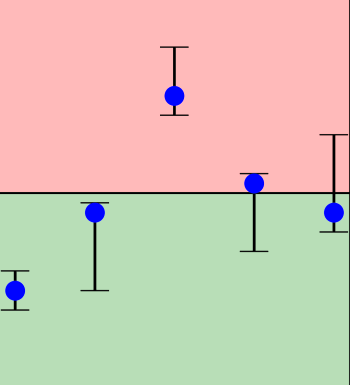
To address safety concerns in industrial systems, we propose a framework for forecasting CPU load with respect to a predetermined threshold, allowing customers to add tasks from a predefined library. Existing tools, akin to Windows Task Manager, provide limited insights due to their aggregate nature and high computational overhead. Our approach uses conformal prediction for rapid uncertainty-aware forecasts and Shapley value analysis to quantify individual task contributions to the CPU load. This proof-of-concept framework improves system safety assessment by addressing key research questions in load prediction and validation, paving the way for refined measurement methodologies in industrial applications.
@inproceedings{Jelacic2025-wm, title = {A conformal prediction-based framework for {CPU} load forecasting: A black-box approach}, author = {Jelačić, Edin and Seceleanu, Cristina and Backeman, Peter and Xiong, Ning and Seceleanu, Tiberiu and Jantsch, Axel}, booktitle = {2025 IEEE 49th Annual Computers, Software, and Applications Conference (COMPSAC)}, publisher = {IEEE CS}, year = {2025}, eventtitle = {2025 IEEE 49th Annual Computers, Software, and Applications Conference (COMPSAC)}, venue = {Toronto, ON, Canada}, pages = {361--370}, date = {2025-07-08}, urldate = {2025-08-28}, keywords = {conformal prediction; Shapley; CPU; forecasting; load}, language = {en}, } - Machine learning-based cache miss predictionEdin Jelačić, Cristina Seceleanu, Ning Xiong, and 3 more authorsPublisher: Springer
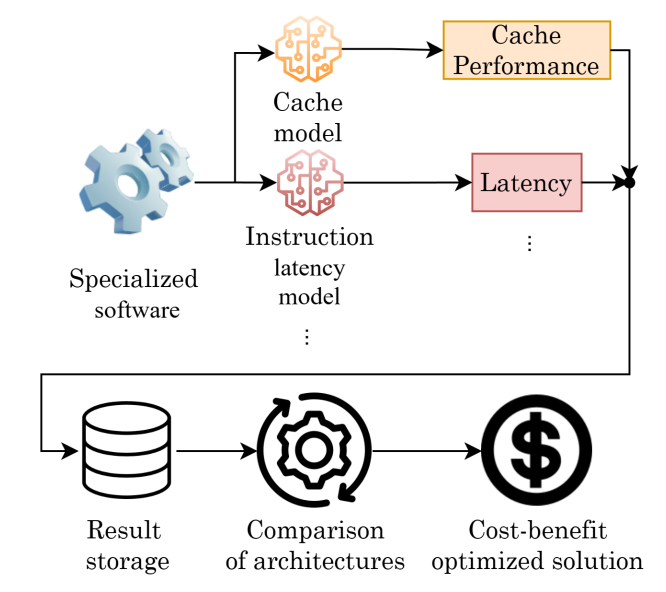
Integrating machine learning into computer architecture simulation offers a new approach to performance analysis, moving away from traditional algorithmic methods. While existing simulators accurately replicate hardware, they often suffer from slow execution, complex documentation, and require deep CPU knowledge, limiting their usability for quick insights. This paper presents a deep learning-based approach for simulating a key CPU component, cache memory. Our model "learns" cache characteristics by observing cache miss distributions, without needing detailed manual modeling. This method accelerates simulations and adapts to different program needs, demonstrating accuracy comparable to traditional simulators. Tested on Sysbench and image processing algorithms, it shows promise for faster, scalable, and hardware-independent simulations.
@article{Jelacic2025-rb,
  title = {Machine learning-based cache miss prediction},
  author = {Jelačić, Edin and Seceleanu, Cristina and Xiong, Ning and Backeman, Peter and Yaghoobi, Sharifeh and Seceleanu, Tiberiu},
  journaltitle = {Int. J. Softw. Tools Technol. Transf.},
  publisher = {Springer},
  year = {2025},
  volume = {27},
  issue = {1},
  pages = {53--80},
  date = {2025-02-22},
  urldate = {2025-04-23},
  language = {en}
}
2023
- Abstraction-based reduction of input size for neural networksPeter Backeman, Edin Jelačić, Cristina Seceleanu, and 2 more authorsPublisher: Springer
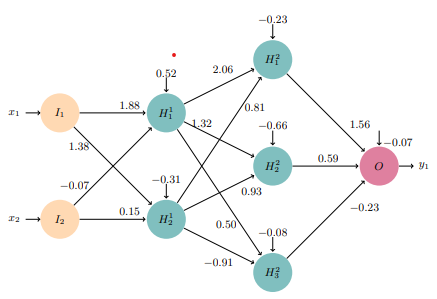
Machine learning is an increasingly popular method for modeling complex systems, to make predictions or recognize data patterns. A common machine learning model is the neural network, which can be trained to represent complicated functions to a high accuracy. While neural networks often grow large and complex, recent work is looking in how to abstract networks to yield simpler representations, while retaining some property of the original network. For instance, for every input, the abstracted network’s output should be at least as large as the original. In this work, we build on previous ideas and extend them to allow for removing inputs, obtaining an under/over-approximating network instead. Further, we show how to combine these approximating networks to identify inputs which have a low impact on the final output.
@inproceedings{Backeman2023,
  title = {Abstraction-based reduction of input size for neural networks},
  author = {Backeman, Peter and Jelačić, Edin and Seceleanu, Cristina and Xiong, Ning and Seceleanu, Tiberiu},
  booktitle = {Automated Reasoning and Verification - 3rd Workshop on Tools and Benchmarks, ISoLA 2023},
  publisher = {Springer},
  year = {2023},
  keywords = {Neural network;Abstraction;Dimensionality reduction;Feature Selection},
}